Sunday, January 30, 2011

Get up close. If you think your close, get closer.

If you want to fill the frame with a subject, how close can you get? The answer depends on how much you want to show, and the ability of your camera to focus on closeup objects. It is also acceptable to focus in tight on one part of your subject adding emphasis to some thing that is often overlooked.


Assignment


1. Get an interesting three dimensional object, such as a vase of flowers, to practice on.
2. Set your camera to Macro, or bring the subject in as close as your lens will let you 
3. Shoot your subject from a range of distances. Look at your photos on the computer screen. How much of the object is in focus? You may find that you can't keep the entire object in focus when shooting close. This can be used to help make the most important part of the picture jump out at the viewer.


Happy shooting.

Saturday, January 29, 2011

Tuesday, January 25, 2011

Week 4 : Depth Perception

Use the world around you to draw attention to depth in a picture, shoot subjects that are enhanced or balanced by a perceived depth or distance.

This post ia a little late, sorry. I started to attend school again at night after work.

Friday, January 21, 2011

w3:52:2011


w3:52:2011, originally uploaded by hermitsmoores.
A Bicycle shot that was inspired by Phongs excellent shot at the top.

Sunday, January 16, 2011

Week 3


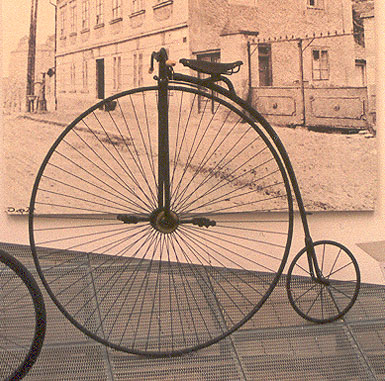
"A bicycle, also known as a bike, pushbike or cycle, is a pedal-driven, human-powered, single-track vehicle, having two wheels attached to a frame, one behind the other. A person who rides a bicycle is called a cyclist or a bicyclist.
Bicycles were introduced in the 19th century and now number about one billion worldwide, twice as many as automobiles.[1] They are the principal means of transportation in many regions. They also provide a popular form of recreation, and have been adapted for such uses as children's toys, adult fitness, military and police applications, courier services and bicycle racing.
The basic shape and configuration of a typical upright bicycle has changed little since the first chain-driven model was developed around 1885.[2] However, many details have been improved, especially since the advent of modern materials and computer-aided design. These have allowed for a proliferation of specialized designs for particular types of cycling.
The invention of the bicycle has had an enormous impact on society, both in terms of culture and of advancing modern industrial methods. Several components that eventually played a key role in the development of the automobile were originally invented for the bicycle – e.g., ball bearings, pneumatic tires, chain-driven sprockets, spoke-tensioned wheels, etc." Wikipedia

See if you can capture these 5 elements of photography:  Pattern, Symmetry,  Texture, Depth of Field, and Lines. The subject matter is common, every day, and yet world changing. Do it justice.

Happy shooting.
Photo by Steelworx

Saturday, January 8, 2011

Shadows

Shadows happen, most of the time we don't pay attention to them. How much visual treasure are we overlooking and even trampling underfoot by ignoring shadows?

This week try to give shadows priority in your pictures. Make them in to part of the composition, use them for leading lines and emphasis or framing of your compositional subject.

Saturday, January 1, 2011

First assignment Week 1 - LINES AND CURVES

A curve is nothing more than a line that has been bent, right? Therefore, a curve is both a related to , and different form, a line.

Why does this matter to photographers who want to improve the compositional integrity of their images? It matters because it means that when you record a photograph that is basically a collection of lines and curves, you are automatically infusing the image with two major pillars of art theory: Harmony and Contrast.


And all or this is really just a roundabout way of saying that since people are naturally drawn to artistic beauty, amiable combinations of lines and curves  can be very hard to resist-whether these forms compose a logo, a work of art, an automobile or a photographic image.

Try this: Choose an object in your immediate vicinity-the more mundane, the better. Use your viewfinder to search for points of view that turn portions of your chosen subject into compositions of lines, curves, and shapes. The photographs you take could include the whole subject or close up details-the images could be of identifiable subject matter or abstract. This is a good self-teaching exercise that you can do almost any time, anywhere, with your digital comera. Over time, you might be able to collect an entire series of images such as this-a series that might make an interesting ensamble when shown together...